After a New Car Battery: First Start, Resets, Care
What to Do After Installing a New Car Battery: Safe Starts, System Resets, and Long-Term Care
A new battery solves a no-start problem, but it can also trigger warning lights, lost settings, and idle quirks if the vehicle’s electronics and charging system aren’t verified. A simple post-install routine—safety checks, a careful first start, a few common relearns, and basic maintenance habits—helps the car stay dependable and keeps the battery healthy for years.
Before turning the key: quick safety and fit checks
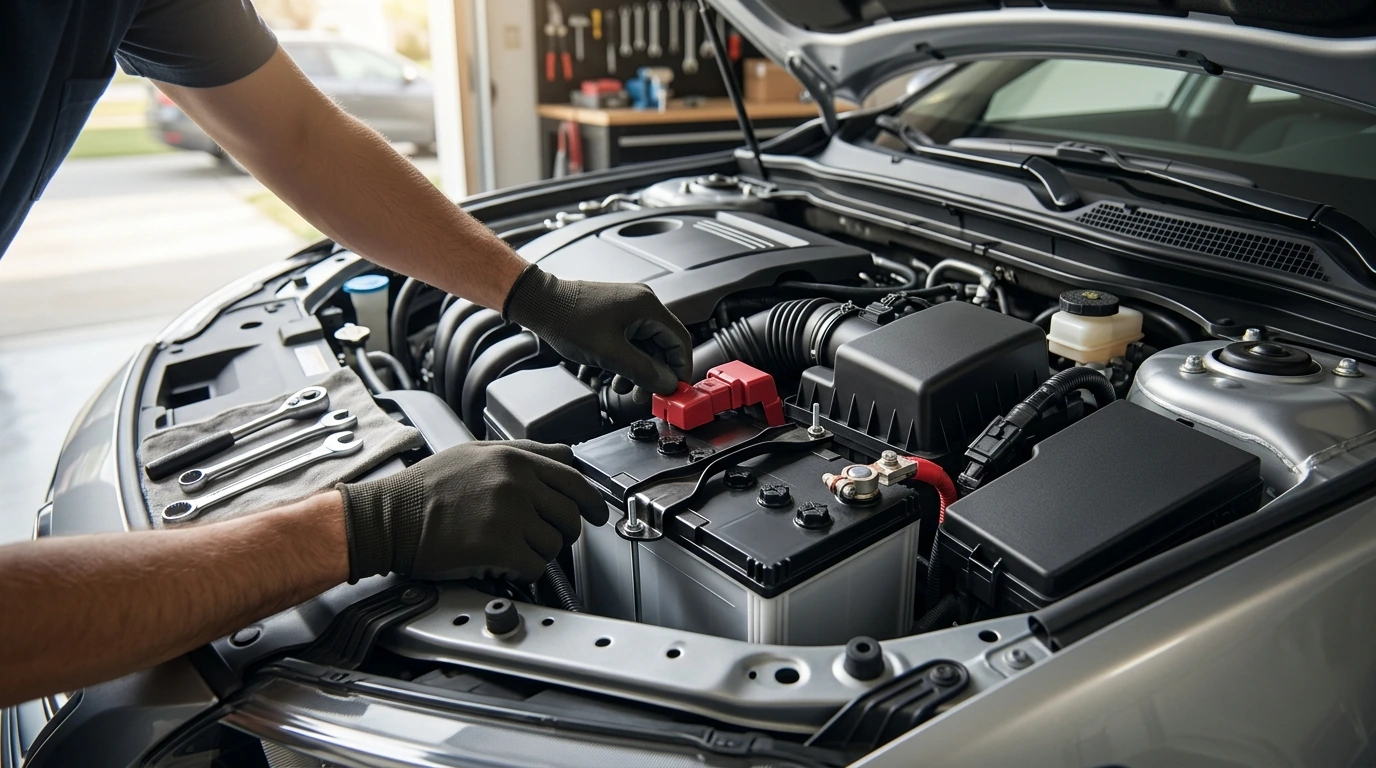
Before the first start, take two minutes to confirm the battery is mounted correctly and the connections are solid. Many “new battery” issues are actually loose clamps, reversed polarity, or a missing hold-down.
- Confirm the battery is the correct group size and orientation so the cables reach without stretching or twisting.
- Verify terminals are fully seated on the posts; the clamps should not rotate by hand once tightened.
- Check polarity: positive cable to (+), negative cable to (–). If color coding is unclear, trace the positive cable to the fuse/relay box and the negative to the chassis/engine ground.
- Ensure the hold-down bracket is installed and tight; a loose battery can crack internally or damage cables over bumps.
- Inspect for corrosion or debris at the terminal surfaces; clean if needed and consider a light protective coating on the posts after tightening.
- Look for pinched wiring near the battery tray and confirm any vent tube (common on some vehicles) is attached properly.
First start routine to protect electronics and confirm a healthy connection
The first start is your quick “proof test” that the connections, battery charge level, and charging system are cooperating.
- Turn the ignition to ON (without starting) for 10–20 seconds to let modules wake up; then start the engine normally.
- If the starter cranks slowly, stop and recheck terminal tightness, ground connection, and battery state of charge before repeated attempts.
- Watch for immediate warning lights; some are normal after power loss and may clear after a short drive, while others indicate a charging or communication issue.
- Listen for unusual clicks or rapid relay chatter, which can point to a poor connection or weak battery.
- After the engine starts, let it idle for a minute before switching on heavy electrical loads (rear defroster, blower on high, heated seats).
Post-Install Checklist (10–20 minutes)
| Step | What to check | What “good” looks like | If not |
|---|---|---|---|
| 1 | Terminal clamp tightness | Clamps do not twist by hand; no arcing/sparking | Retighten; clean mating surfaces |
| 2 | Battery hold-down | Battery cannot slide; bracket secure | Reinstall/adjust hold-down hardware |
| 3 | First start | Strong crank; starts promptly | Check connections; charge-test battery |
| 4 | Charging voltage (optional meter) | About 13.8–14.8 V at idle (varies by vehicle) | Inspect alternator, belt, wiring; get tested |
| 5 | Lights & accessories | No flicker; radio, windows, locks function | Check grounds and fuses; perform relearns |
| 6 | Warning indicators | Temporary lights may clear after short drive | Scan codes if lights persist |
System resets and relearns that commonly matter
Power loss can make the vehicle “forget” a few convenience features or adaptations. Most relearns are quick, but procedures vary by model—use the owner’s manual when available.
Confirm the charging system so the new battery stays new
For battery safety, handling, and responsible recycling, review the guidance from Battery Council International (BCI). For general battery care and replacement expectations, AAA is a helpful reference.
Clean-up steps that prevent future no-starts
For gentle cleaning around terminals, tray edges, and tight corners, consider the Ultra Soft Car Detailing Brush Set.
Long-term battery care habits that make a real difference
A simple routine helps: Car Maintenance Schedule for Every Mile: A Complete Guide to Car Maintenance by Mileage organizes what to check and when, so battery health doesn’t get overlooked.
When to stop and get help
It can also be worth checking NHTSA recalls if the vehicle has known electrical or charging-system issues tied to your model year.
Recommended quick-reference help
If you want a printable sequence (safety checks, first start steps, common relearns, and long-term habits), What to Do After Installing a New Car Battery | Complete Step-by-Step eBook Guide for Safe Starts, System Resets & Long-Term Battery Care keeps everything in one place.
FAQ
Why is my check engine light on after replacing the battery?
Power loss can reset readiness monitors and occasionally trigger temporary codes while modules reinitialize. If the light doesn’t clear after a few normal drive cycles, scan the codes to confirm whether it’s a relearn issue, a loose connection, or an unrelated fault.
Do I need to reset anything after installing a new car battery?
Common resets include the clock, radio presets, and one-touch windows; some vehicles also need sunroof initialization or idle/throttle adaptation. If stability/ABS lights stay on, the steering angle or traction system may need a drive relearn or a scan tool calibration.
How long should a new battery take to charge after installation?
If the battery was fully charged when installed, normal driving mainly maintains it. If it was partially or deeply discharged, it’s best to recharge with a smart charger rather than relying on short drives or the alternator alone.











Leave a comment